Most failed subscription payments aren't lost; they're recoverable. The difference between a 47% recovery rate and 85% isn't effort; it's whether your system classifies the failure correctly, builds a plan around the individual customer, and times every retry and outreach to when it's most likely to land. Here's the full recovery sequence that gets them back.
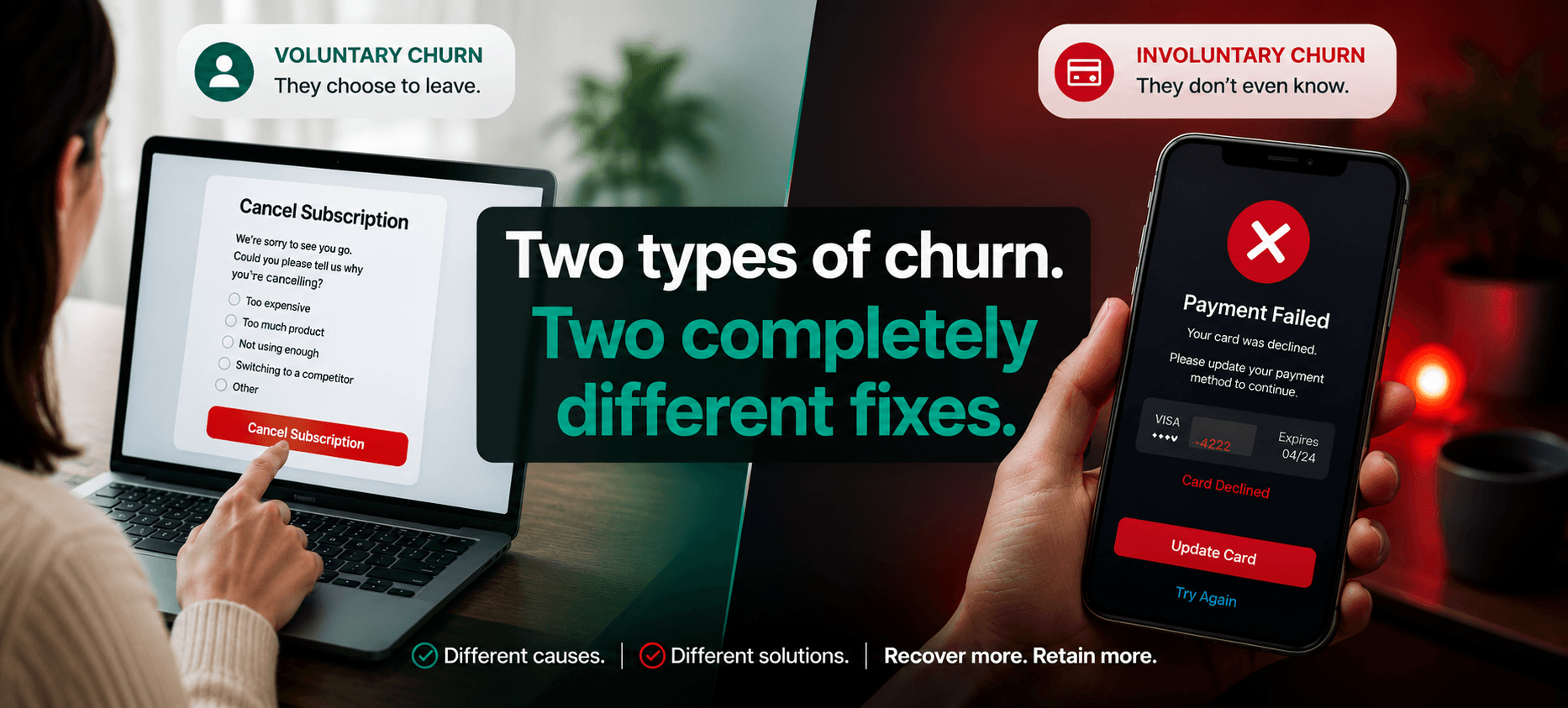
Most subscription brands track one churn number for two completely different problems hiding inside it. Retrying a cancelled card wastes billing attempts. Sending a discount to someone who just wants a different product wastes goodwill. Here's how to tell voluntary from involuntary churn apart and fix each one correctly.
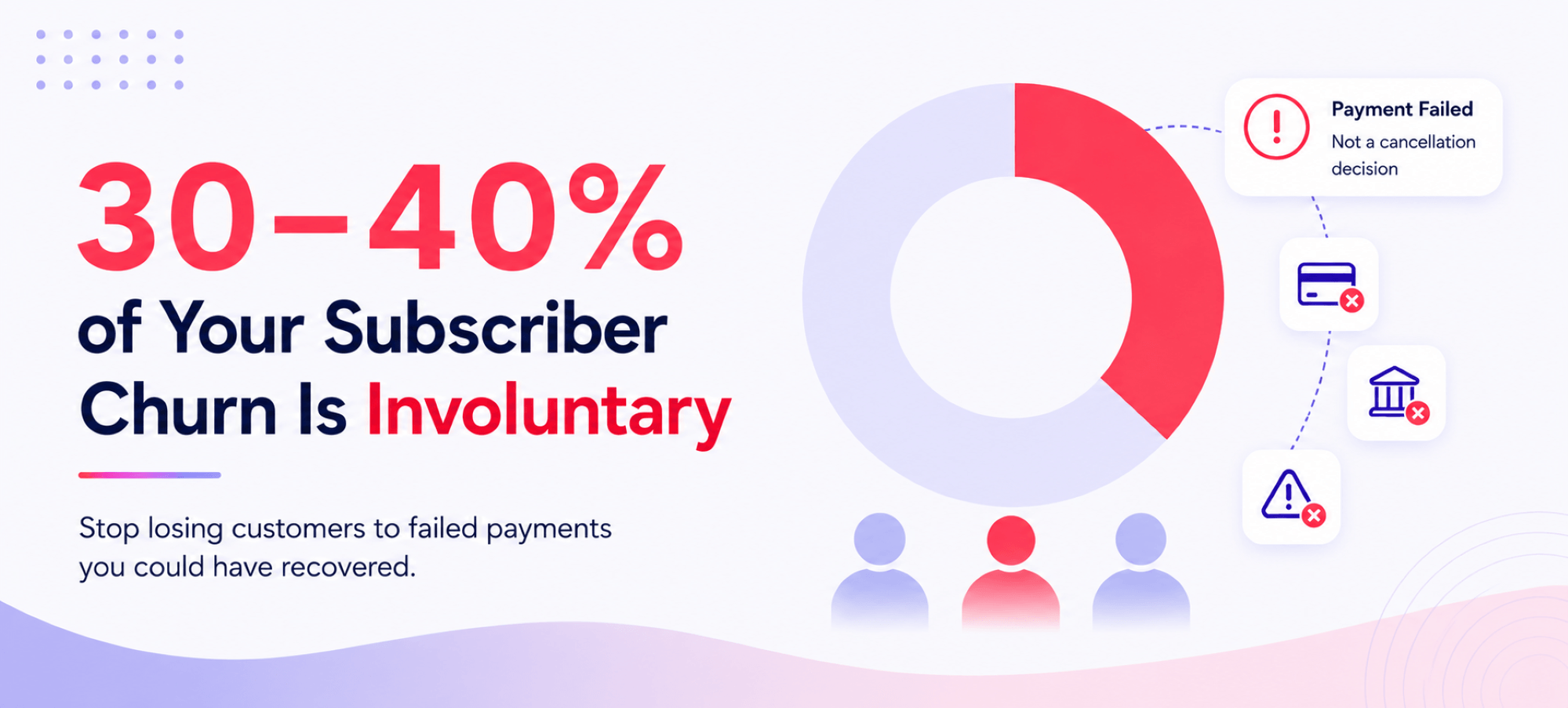
30–40% of subscription churn has nothing to do with your product. It's failed payments, expired cards, and bank blocks that silently remove subscribers who still want to be with you. This post breaks down why involuntary churn is the most recoverable revenue leak in your business, and how AI-driven recovery systems like enComm fix it automatically.
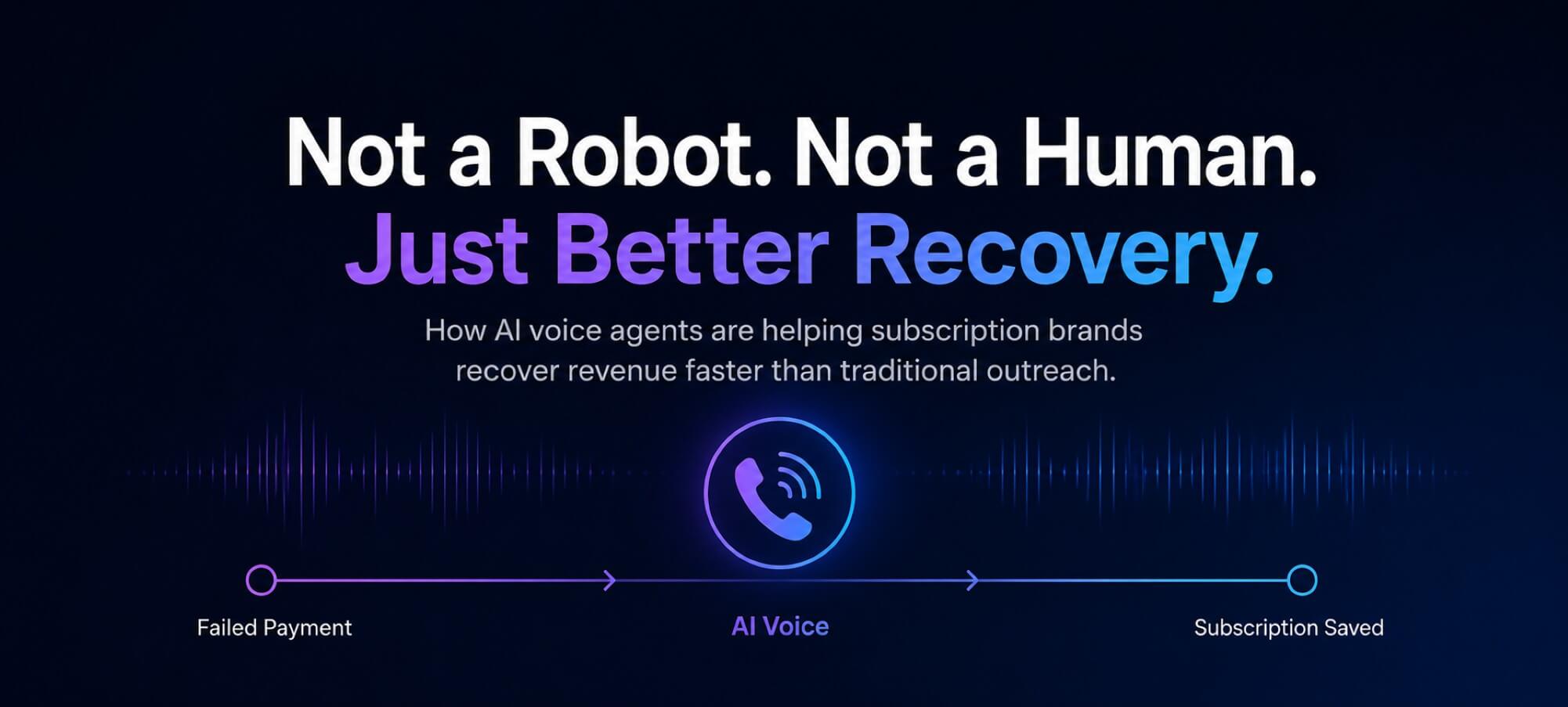
Email-based dunning is passive by design. It waits for the customer to notice and act. AI voice agents create immediate, two-way conversations that resolve payment issues while the subscriber is still engaged. This post breaks down why that difference in approach translates directly into better recovery rates, lower operating costs, and less churn.