Most subscription brands think about CLV as a number they measure. The brands pulling ahead in 2026 treat it as a number they engineer, through every interaction, every intervention, and every moment a subscriber considers leaving.
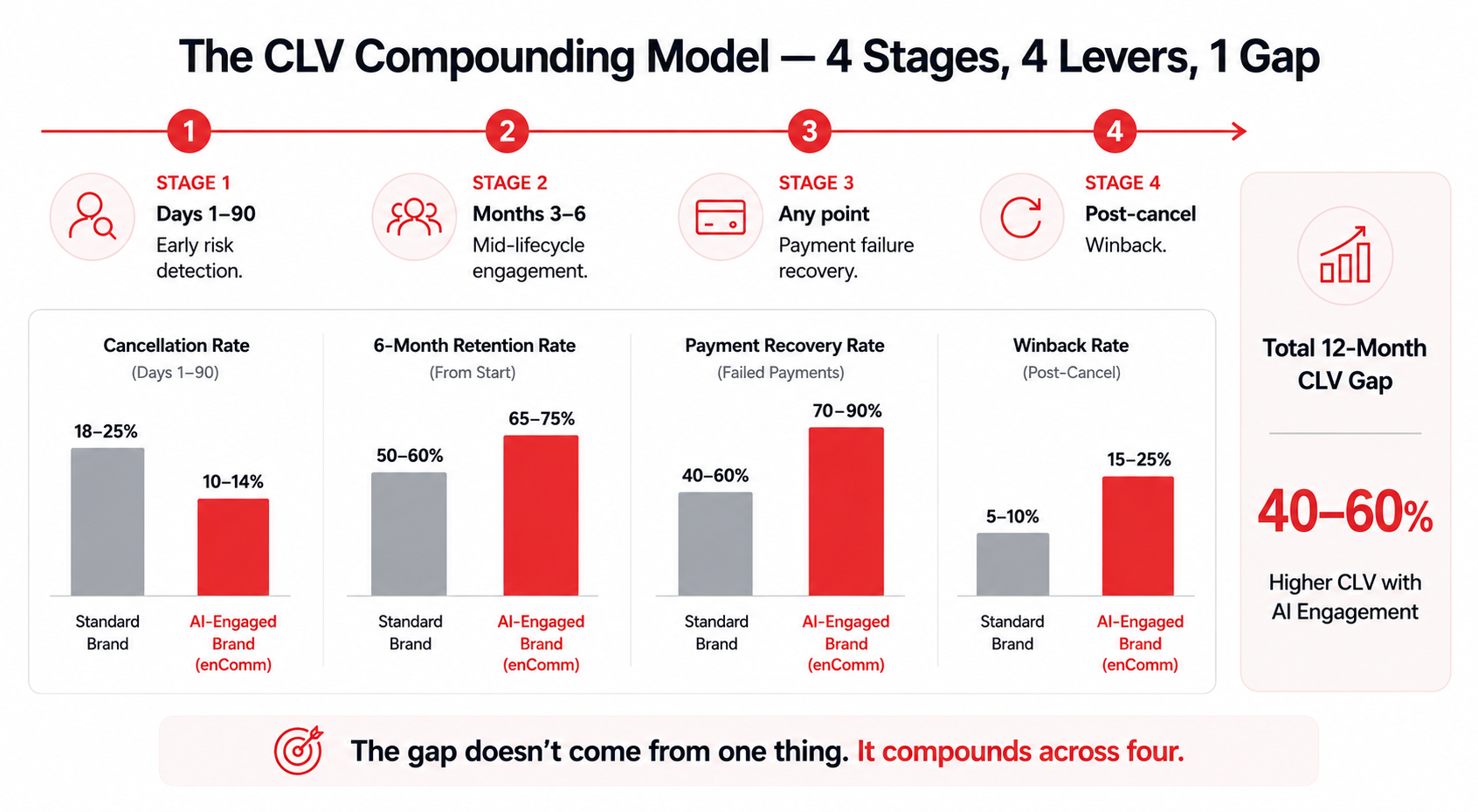
Subscription brands that use AI across retention, recovery, and reactivation can achieve materially higher subscriber CLV over time. In many cases, the combined impact can reach 40–60% over a 12-month period. But the number on its own doesn’t answer the question that actually matters for your business: where, specifically, does that CLV gap come from?
It’s not magic. It’s math, compounding across four distinct stages of the subscriber lifecycle. And once you understand the mechanics, the number stops feeling like a marketing claim and starts feeling like a forecast.
This post breaks it down stage by stage. If you want the full picture of how retention and recovery fit together across your subscriber base, the “Complete Guide to Revenue Retention & Recovery for Subscription Brands” covers the strategic framework in full.
The CLV Gap Is Real. Here’s Why It Compounds.
Customer lifetime value in subscription commerce is a product of three variables: how much a subscriber spends per cycle, how many cycles they stay, and how often a failed payment interrupts that streak. Improve any one of these and CLV goes up. Improve all three simultaneously, which is what AI engagement does, and the gains multiply rather than add.
That compounding mechanism is why the CLV gap between AI-engaged and non-AI-engaged subscribers is so wide. It’s not that AI does one thing better. It works across the entire lifecycle simultaneously, and the improvements at each stage amplify each other.
The Four Lifecycle Stages Where CLV Is Won or Lost
Stage 1: The First 90 Days — Retention Before It’s Needed
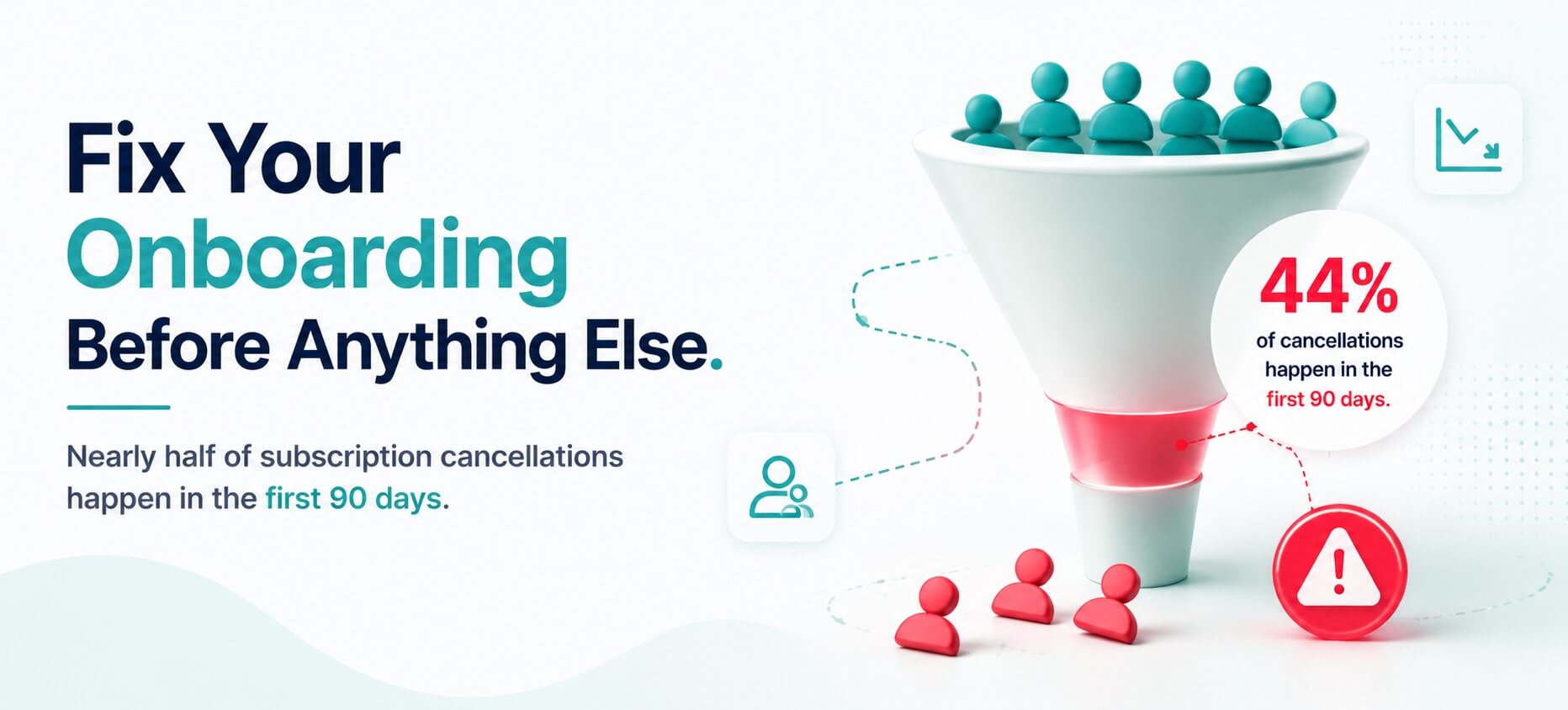
The first 90 days of a subscription are the highest-risk window in the entire subscriber lifecycle. This is where perceived value is being established and where the smallest friction — a confusing experience, a product that didn’t quite match expectations, a billing surprise — can accelerate a cancellation decision the subscriber was already on the fence about.
For standard brands, this window is largely unmonitored. The subscriber either stays or doesn’t. For AI-engaged brands, it’s an active period. Behavioural signals — engagement patterns, order activity, email interactions — are read continuously. A subscriber who starts skipping orders in week three triggers a proactive response, not a cancellation confirmation six weeks later. The intervention happens before the decision is made.
Modern retention platforms can identify behavioural patterns that often emerge weeks before cancellation occurs, giving merchants an opportunity to intervene before revenue is lost.
A subscriber who receives a relevant, well-timed intervention in week eight, before they’ve decided to cancel, has a materially higher probability of staying through month four and beyond than one who receives a save offer at the cancellation screen. That additional month’s revenue begins the compounding effect.
Stage 2: Mid-Lifecycle Engagement — The Quiet Drift Problem
Subscribers who survive the first 90 days don’t stay forever by default. Between months three and six, engagement typically troughs. The novelty has worn off, the product is part of the routine, and the subscriber is less actively engaged with the brand. This is the window where passive cancellation decisions form, not dramatic exits, but slow fades.
AI engagement targets this window precisely. Rather than waiting for a cancellation signal, the system identifies changes in engagement patterns that historically precede cancellation by weeks and responds with personalised outreach, relevant offers, or flexible options like pause or frequency change. The goal is not to sell harder. It’s to remind the subscriber why they subscribed and remove friction before it accumulates into a cancellation.
According to Zendesk's 2025 CX Trends Report, organisations leading in AI-powered customer experiences achieve significantly stronger retention outcomes than their peers.
A subscriber who stays through month six has demonstrated engagement depth that makes them significantly less likely to churn in months seven through twelve. Each retained month is not just its own revenue; it’s a multiplier on the probability of staying further.
Stage 3: Payment Failure — The Invisible CLV Killer
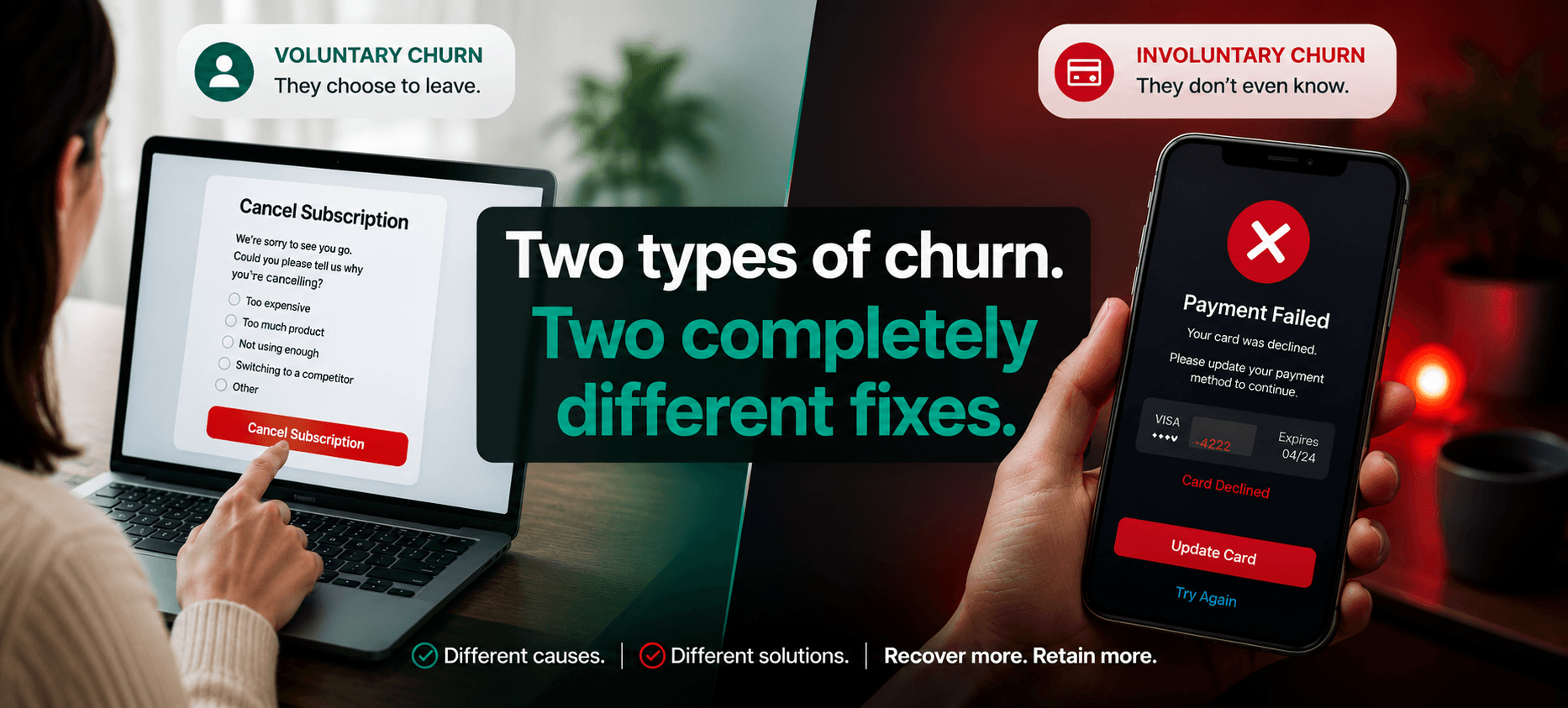
Here is where a significant portion of the CLV gap between AI-engaged and standard brands lives, and it’s the least visible. Payment failures happen at every subscription business, but what happens next determines whether a subscriber’s CLV continues to build or ends abruptly.
For standard brands, a failed payment triggers a generic dunning sequence: the same three emails to every subscriber, retried on the same fixed schedule regardless of why the payment failed or who the subscriber is. Many recoverable failures become permanent losses not because the subscriber wanted to leave, but because the recovery was mismatched to the situation. When the recovery experience feels complicated, delayed, or disconnected from the subscriber's needs, a preventable payment issue can quickly become churn.
This is why payment recovery has become one of the most important drivers of subscriber lifetime value. Every successfully recovered subscription extends the customer relationship, protects recurring revenue, and increases the total value generated over the subscriber's lifetime.
Unlike acquisition, recovery focuses on revenue you've already earned and relationships you've already built. Every recovered payment preserves future renewal opportunities, making payment recovery one of the highest-leverage contributors to long-term CLV growth.
→ Read next: Why 30–40% of Your Subscriber Churn Is Actually Involuntary — And How enComm Fixes It — The payment failure side of subscriber CLV loss — and how AI-powered recovery closes the gap
Stage 4: Winback — Recovering CLV That Looks Gone
Even with the best retention and recovery systems in place, some subscribers cancel. The question that determines final 12-month CLV is whether those subscribers are treated as lost revenue or as a reactivation opportunity.
Standard brands either have no winback process at all, or they send the same re-engagement email to every cancelled subscriber regardless of why they left. AI-engaged brands match the winback approach to the cancellation reason, time it to the relationship, and, for high-value subscribers, lead with a personal outreach rather than a generic email.
A reactivated subscriber doesn’t start their CLV from zero. They carry the product familiarity, the established payment method, and the brand relationship they built before cancelling. Their second-tenure CLV often outperforms their first. Including winback reactivations in a 12-month CLV model, which AI-engaged brands do because their systems generate them systematically, is a meaningful contributor to the final gap.
The Math, Modelled: What the Gap Looks Like in Practice
Here’s how the compounding effect plays out for a representative subscription brand — $60 average monthly order value, a 5,000-subscriber base.
These numbers are illustrative but grounded in the benchmarks cited throughout this post. The compounding mechanism is real: each improvement at an earlier stage increases the subscriber pool that reaches the next stage, amplifying the impact of every subsequent improvement.
The 50% CLV uplift in this model falls squarely in the middle of the 40–60% range. Brands with higher-value subscriber bases or higher current churn rates will see larger absolute gains. Brands with already-strong retention will see smaller percentage gains but still meaningful absolute ones.
What Actually Drives This CLV Uplift
The CLV uplift is not produced by any single AI feature. It’s produced by AI that operates at every stage of the lifecycle simultaneously, and where the output of each stage informs the next.
A churn system that doesn’t know which subscribers have open payment failures will send intervention emails to subscribers who are already in a recovery sequence. A payment recovery system that doesn’t know a subscriber declined a retention offer during cancellation will offer the same discount again in the winback campaign. A winback system that doesn’t know a subscriber’s cancellation reason will send the wrong offer and lose the reactivation.
This is the fundamental limitation of stitching together separate tools, a subscription platform, a separate dunning app, and a manual winback process. Each tool sees only its own slice of the subscriber’s story. The CLV gains from each are real but siloed. The compounding effect, the part that gets you to 40–60%, only happens when the systems share context and inform each other.
According to the Recurly State of Subscriptions Report, subscription businesses continue to prioritise customer retention and long-term subscriber value as key drivers of sustainable growth. As subscriber acquisition costs increase, extending subscriber lifespan and protecting recurring revenue have become increasingly important growth levers.
How enComm Makes This Concrete for Your Subscriber Base
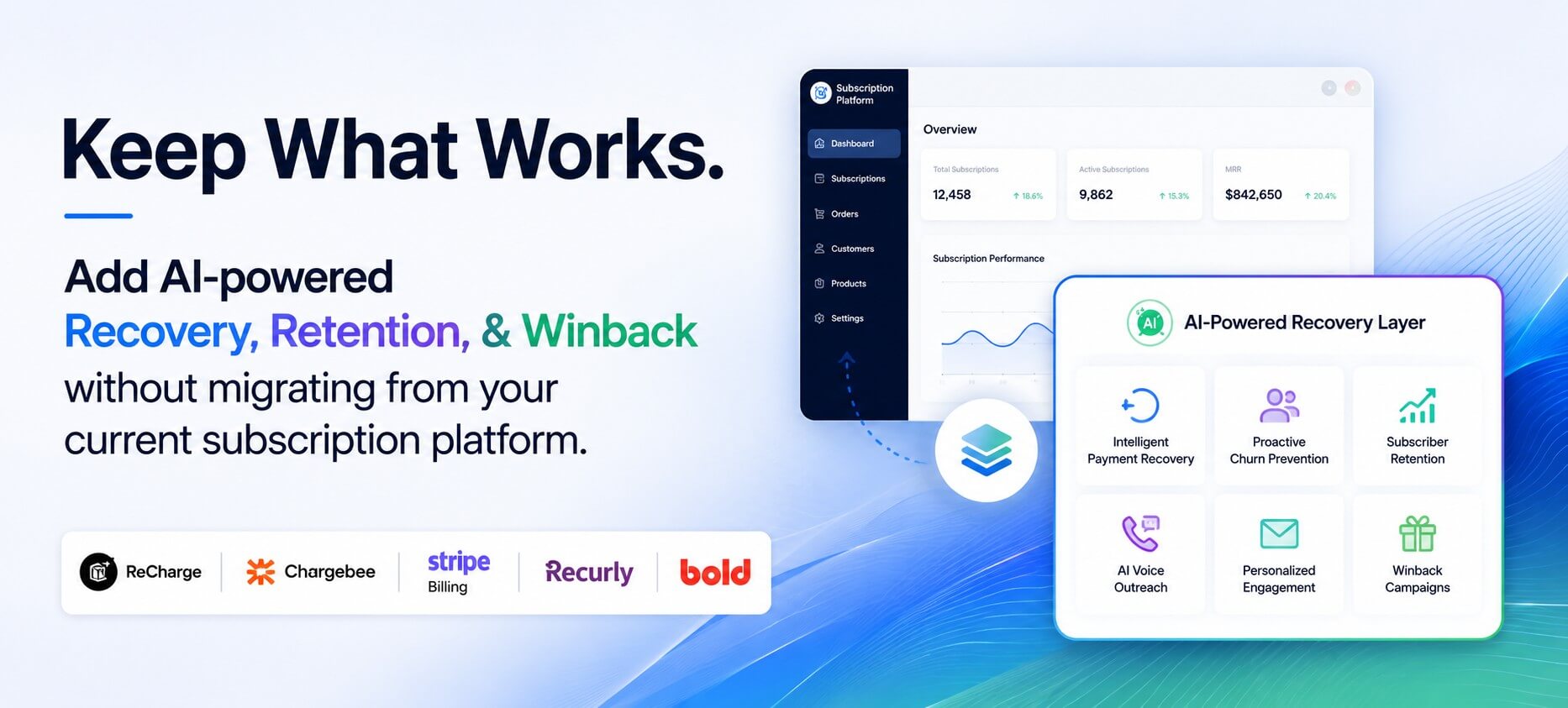
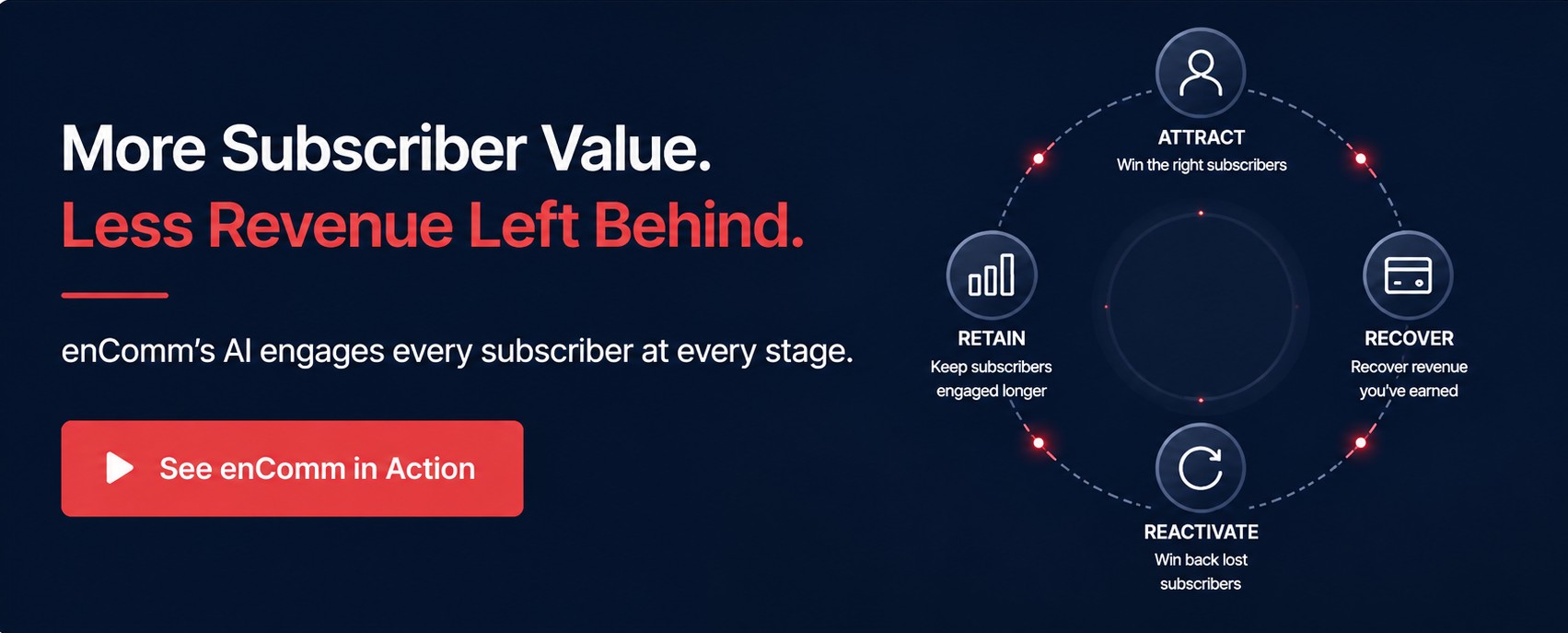
enComm is the AI-native platform that operates across all four lifecycle stages described in this post, available to brands on Shopify, ReCharge, Stripe Billing, Chargebee, Recurly, and more. For merchants on non-Shopify platforms, enComm operates as a recovery and retention layer on top of their existing subscription stack, with no migration required.
At Stage 1, enComm monitors every active subscriber daily for churn risk and intervenes with personalised outreach or a targeted offer before a cancellation decision is made, giving brands the 30-day intervention window that converts high-risk subscribers into long-tenure ones.
At Stage 2, it monitors mid-lifecycle engagement signals and acts on them automatically. Pause, skip, frequency change, and product swap options are offered to subscribers who are drifting, removing the friction that accumulates into cancellation without removing them from the subscriber base.
At Stage 3, every failed payment is read individually, its type, its severity, and the profile of the subscriber behind it, and a bespoke plan is executed automatically. High-value subscribers get faster, more persistent outreach across more channels, including AI voice. Every recovery plan stops the moment the issue resolves, protecting the customer relationship while maximising the recovery rate.
At Stage 4, winback campaigns launch automatically for cancelled subscribers, matched to their cancellation reason and their relationship history. High-value subscribers get an AI outbound call. Reactivation completes with a single click, and the new subscription is created with the agreed terms already applied.
The full CLV effect comes from all four stages operating on shared subscriber context, so the churn system knows about recovery cases, the recovery system knows about cancellation history, and winback campaigns know what’s already been offered.

The Bottom Line
The 40–60% CLV gap is not a marketing stat. It’s the mathematical output of AI working simultaneously at four lifecycle stages where standard tools either don’t operate or operate in isolation. Early detection extends first-tenure survival. Mid-lifecycle engagement extends average duration. Intelligent payment recovery converts failures that would otherwise become permanent losses. Reason-matched winback reactivates revenue that looked gone.
Each stage builds on the one before it. The compounding is the point. And the only way to achieve it is with a system where every stage shares context, so that each intervention is informed by everything that came before it in that subscriber’s story. Whether you're running subscriptions on Shopify, ReCharge, Stripe Billing, Chargebee, or Recurly, the principle remains the same: subscriber lifetime value grows when retention, recovery, and reactivation work together.